
The Table Was Never Just About the Meal
What a kindergarten playdate taught me about habits, environment and the quiet things that shape us
Written with warmth and real life experience by Kelly Siskoglou · Health & Wellness Coach
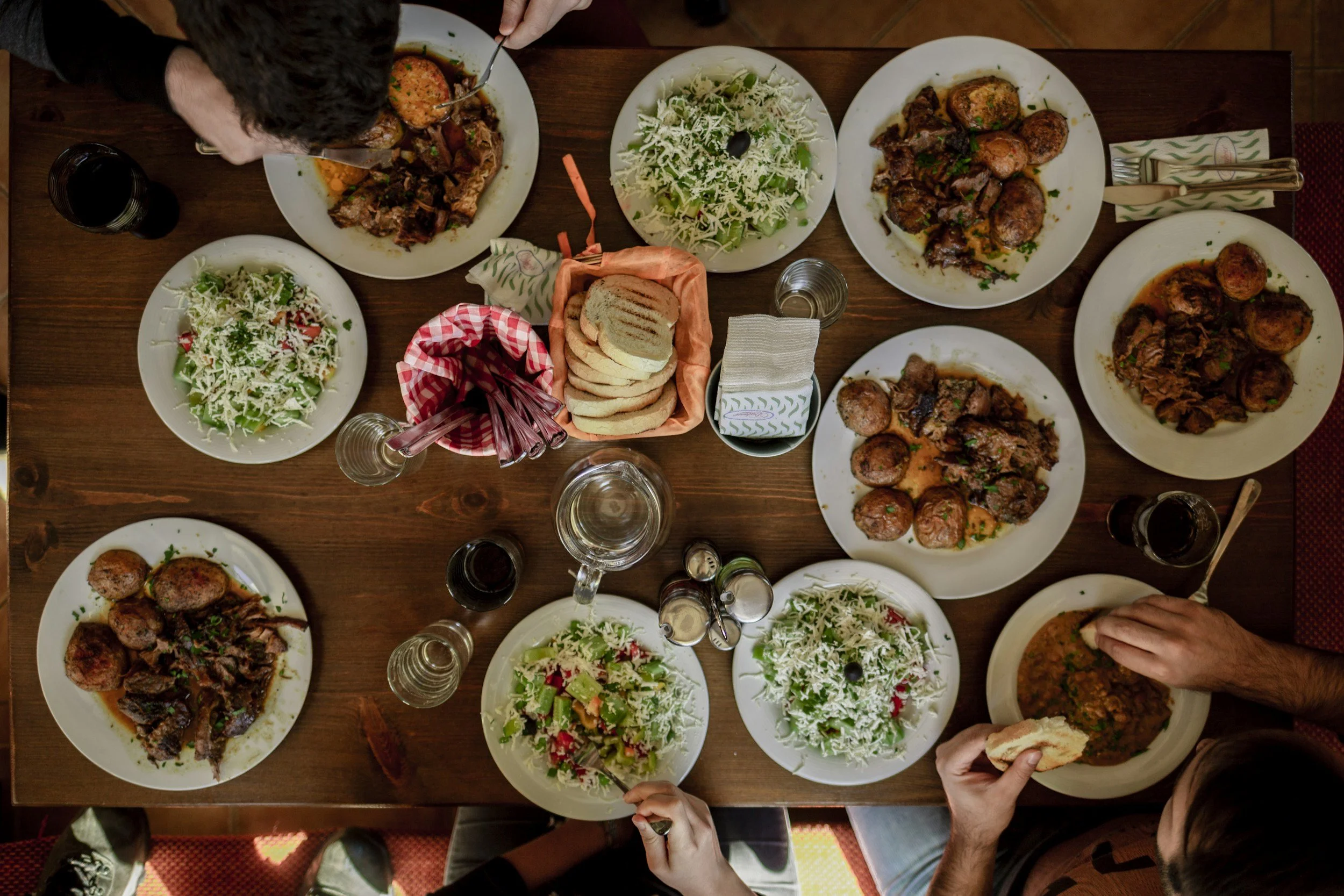
Studies consistently show that people who eat meals together — regularly, without screens and with actual conversation — eat more slowly, feel more satisfied and are significantly less likely to overeat. It has nothing to do with what's on the plate but everything to do with presence, pace and connection.
— American College of Pediatricians & The Family Dinner Project.
When I moved to the United States, I had a culture shock that had nothing to do with the food itself. It wasn't the portion sizes, the grocery stores, the endless menus or the sheer number of options. It was something quieter.
Families weren't eating together.
Where I grew up, every meal was at the dinner table. Every single one. Not on the couch, not in the car, not with a phone in hand. You showed up, you sat down and you ate with your family. It wasn't a rule anyone announced — it was just what life looked like. The table was where the day got processed, and where stories were shared. Where you slowed down, even if only for twenty minutes.
So when I started noticing families eating in shifts — kids in the back seat with a drive-thru bag, everyone grabbing something different at different times — I felt a kind of sadness I couldn't quite name. Not judgment. Just a sense that something was missing.
The Kindergarten Moment That Said Everything
Fast forward a few years. My daughter had her first kindergarten playdate. I set the table, called the girls for lunch, and her little friend looked at me — this small, perfectly honest five-year-old — and told me she didn't want to sit at the dinner table because there was no TV.
She picked up her plate and the TV remote and went and sat in front of the screen.
I stood in my kitchen for a long moment after that. Not upset or judging her family — not at all. Just struck by what I was seeing. At five years old, she already had a different normal. She hadn't been taught it. Nobody had explained it to her. She had simply lived in an environment where that's what mealtime looked like — and it had become, without any decision being made, her default.
That moment has stayed with me ever since, because it's one of the clearest illustrations I've ever seen of how habits actually work.
Habits Aren't Built by Willpower. They're Built by Environment.
We live in a culture that treats healthy habits like a willpower problem. You know what you should do — you just need to want it badly enough, try hard enough, be disciplined enough. And when it doesn't stick, we blame ourselves. We weren't motivated or committed enough. We didn't have what it takes.
But that little girl didn't choose to eat in front of the TV because she lacked willpower. She did it because it felt completely normal. Because the environment she'd grown up in had quietly, consistently taught her what mealtimes were supposed to look like.
This is what behavioral science has been telling us for years: we don't rise to the level of our goals — we fall to the level of our daily routines. The behaviours we repeat most easily aren't necessarily the ones we've consciously chosen but are the ones that feel effortless and supported.
Slowing Down Is a Habit Too
So much of the conversation around food focuses on the food itself. Macros, ingredients, meal prep, clean eating, cutting carbs. While none of that is inherently wrong, we're often missing the bigger picture — the how of eating, not just the what.
When you eat slowly, you give your body time to register fullness. When you eat without screens, you actually taste what you're eating. When you eat with people you love, something in your nervous system settles. You're not just fueling — you're connecting. Which changes everything about how the meal feels and what you take from it.
This isn't a call to be rigid or perfect about mealtimes. Life is busy. Drive-thrus happen. Eating on the couch on a Friday night is one of life's great pleasures. But there's a difference between choosing that occasionally and it being the invisible default — the thing that just happens because nothing in your environment is pulling you toward something else.
The question worth asking isn't just what am I eating? It's what environment am I eating in? And — perhaps most powerfully — what environment are my kids learning to eat in?
That five-year-old didn't know she was making a choice. She was just doing what felt normal. And honestly, that’s the same for most of us too.
The work isn't about forcing yourself to the table through sheer discipline. It's about understanding that the small, invisible things you do consistently — the rituals you keep without even thinking about them — are quietly becoming the world your family thinks is normal.
Your table might be the most underrated wellness habit you already have.
Want Support ?
Does something still feel off even when you're "doing everything right"?
Sometimes the missing piece has nothing to do with food choices — and everything to do with how you're living around food. I'd love to talk.
Book a Free Call by clicking the button