
How Wearable Tech Can Support Your Health Goals (Without Taking Over Your Life)
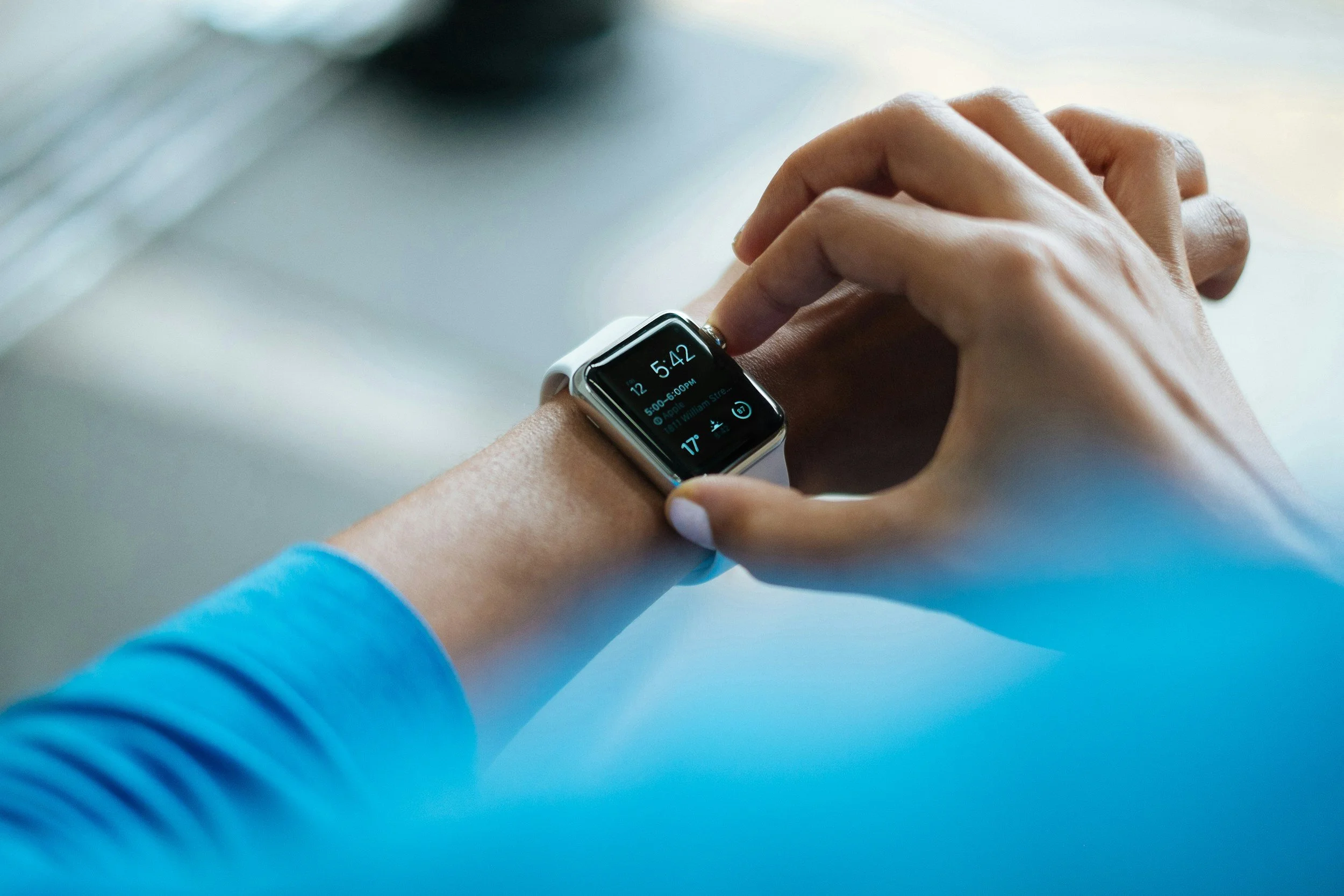
Fitness trackers and smartwatches are everywhere — and so is the conversation about whether they’re actually helpful or just another thing to obsess over.
As a health coach, I’ve seen both sides. I’ve worked with clients who found wearables genuinely transformative, and others who let a step count quietly become another form of self-criticism. The device isn’t the variable. How you relate to the data is. So let’s talk about how to use these tools in a way that actually serves you.
What Wearable Tech Can (and Can’t) Do
Wearables collect data, like steps, heart rate, sleep quality, stress indicators & activity levels. That’s it. They observe. They don’t interpret and they certainly don’t understand your life.
What they can do is hand you information you wouldn’t otherwise have and for a lot of people, that information becomes the starting point for real, sustainable change.
They Build Awareness — Which Is Always Step One
In my work with clients, awareness consistently comes before behavior change. Not motivation or willpower. Awareness.
Most people genuinely don’t know how sedentary their days are, how fragmented their sleep is or how rarely they actually hit consistent movement until they see it reflected back. Wearables close that gap between perception and reality without requiring you to keep a log or rely on memory.
That’s not a small thing. Accurate self-awareness is a foundational skill in building sustainable health habits.
They Reinforce Consistency Over Performance
One of the most damaging thought patterns I see in my clients is all-or-nothing thinking around movement. If they can’t do a “real” workout, nothing counts. If they miss a day, the week is a wash.
Wearables, when used well, can actually push back on that narrative. A 15-minute walk still shows up. Taking the stairs registers. Your body moved and there’s a record of it.
Over time, that reframe — something always counts — is far more powerful for long-term health than any individual workout.
They Help You Connect Habits to How You Actually Feel
This is the benefit most people don’t expect: the feedback loop.
When clients start noticing that a consistent bedtime improves their energy, or that high-stress weeks correlate with worse sleep scores, they stop needing external motivation to make changes. They start making choices based on how they want to feel — not how they think they should perform.
That’s the shift from compliance to genuine self-care. Wearables can accelerate it, when you’re paying attention to the right things.
Sleep Data Is Especially Worth Your Attention
Most people underestimate how profoundly sleep affects hunger, cravings, energy, mood and metabolism. It’s one of the most untapped opportunities in health as well as one of the hardest to self-assess accurately.
Wearable sleep tracking isn’t perfect, but it gives you something to start with: patterns, consistency and a general picture of quality over time. For clients who’ve always brushed off sleep as a luxury, seeing the data often changes the conversation entirely.
Gentle Accountability Has Real Value
There’s a reason coaches exist: external accountability works. Wearables offer a low-friction version of that — a nudge to move, a reminder to breathe or a small celebration when you close your rings or hit your goal.
For people navigating busy schedules, that touchpoint throughout the day matters. It keeps health in the peripheral vision even when life gets loud.
A Word of Caution
If tracking your steps starts to feel like a moral obligation, that’s a signal worth paying attention to.
Wearable tech should reduce friction between you and your goals — not add another layer of guilt or rigidity. If you’re feeling anxious when you miss a goal, mentally replaying your numbers at the end of the day, or letting a low sleep score ruin your morning, then the tool has stopped serving you.
In those cases, I’d encourage you to either adjust how you’re using it or set it aside entirely. No data point is worth your peace of mind.
How I Recommend Using These Tools
With clients, I typically suggest:
• Track 1–2 metrics maximum to start — steps and sleep are usually the most actionable
• Look at weekly trends, not daily numbers — one bad day tells you nothing
• Cross-reference data with how you feel — the numbers should inform your intuition, not replace it
• Revisit your goals seasonally — what you track should shift as your life does
The Bottom Line
Wearable tech is a tool; and like any tool, it’s only as useful as the intention behind it.
Used thoughtfully, it can build the kind of self-awareness, consistency and habit reinforcement that actually moves the needle — especially for people who are busy, overwhelmed, or just trying to figure out where to start.
Want Support That Goes Beyond the Numbers?
Wearable tech can give you data but if you want support in actually translating that into a health routine that works for your life, I’d love to support you.
Book a free call and let’s talk about what that could look like for you.