
An Apple a Day: The Science, the Habit, and Why I'm Obsessed With This Humble Fruit
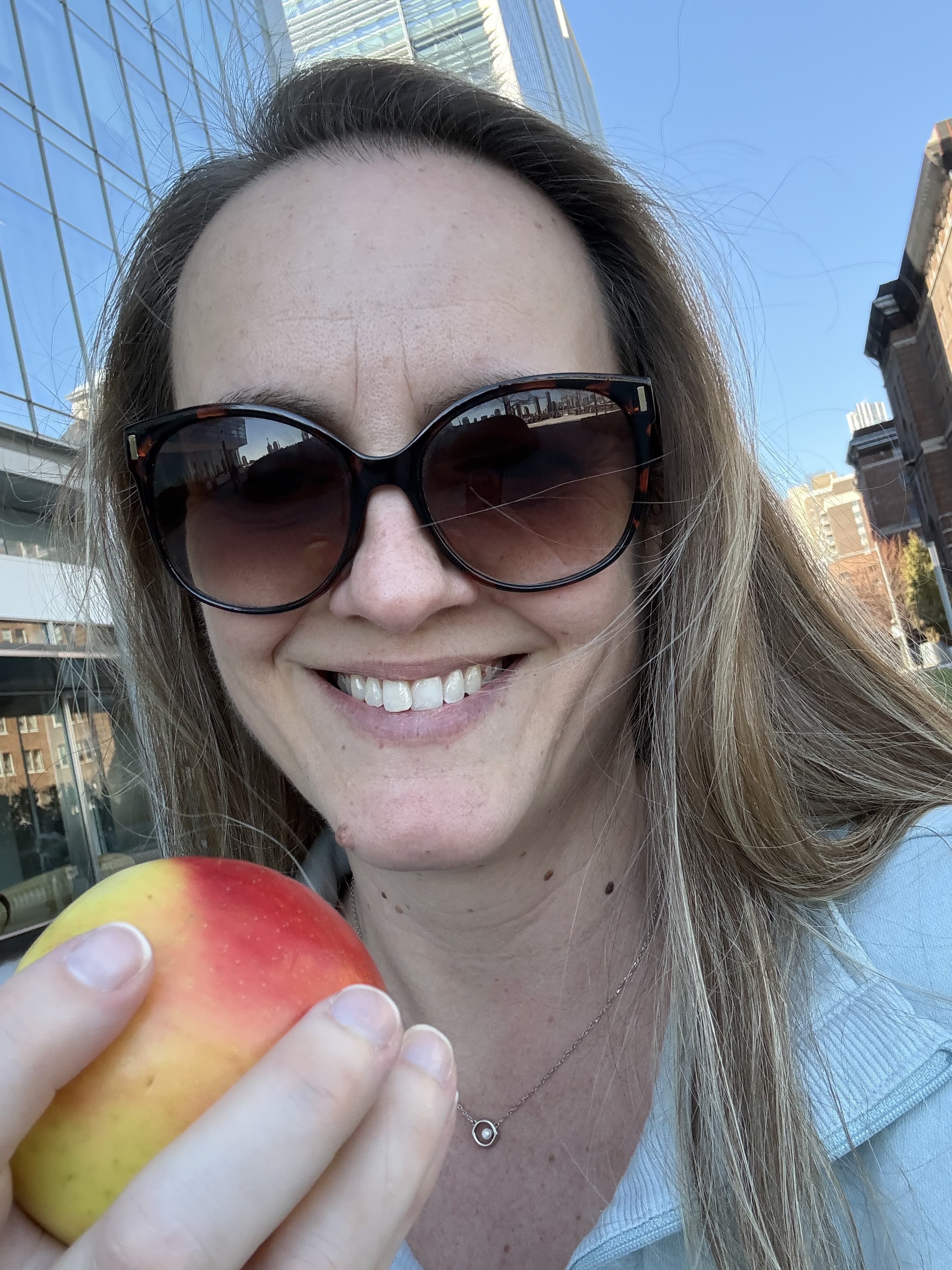
Can I let you in on something? I genuinely love apples. Not in a "I should eat more fruit" kind of way — in a "I always have a bowl of them in my refrigerator and I get unreasonably excited about apple season" kind of way.
There's something so satisfying about a fruit that works in literally every part of your day. A crisp apple in your bag for an on-the-go snack. A warm baked apple with a little cinnamon for dessert that feels indulgent but is secretly nourishing. Stirred into your morning oats. Tossed through a salad for a sweet crunch. And — bear with me here — have you ever tried a cheddar and apple sandwich? If not, please stop what you're doing and make one. That combination is a revelation.
But beyond my personal apple obsession, I want to talk about something that caught my attention as a health coach: the research on apples is genuinely impressive. That old saying — "an apple a day keeps the doctor away" — turns out to be a lot more than a cute rhyme.
What the Science Actually Says
Let's talk about what's happening inside that apple you're eating.
Heart health
Research has found that eating around 100–150g of whole apples daily — roughly one medium apple — is linked to a meaningfully lower risk of heart disease and high blood pressure. Studies in people with elevated cholesterol have shown that eating apples regularly can reduce total cholesterol levels by around 5–8%. Some of that comes down to soluble fibre, some of it to the polyphenols — plant compounds that support healthy blood flow.
Blood sugar and diabetes risk
This one surprised me. A compilation of studies found that eating apples and pears is associated with an 18% reduction in type 2 diabetes risk. Just one serving per week may lower risk by 3%. The high levels of anthocyanins — a type of powerful antioxidant — are thought to play a significant role here.
Inflammation
Chronic low-grade inflammation is one of the most talked-about issues in midlife health — and with good reason. Apples contain quercetin, an antioxidant that has been shown to reduce inflammation, particularly in the respiratory system. Multiple studies show that eating apples lowers C-reactive protein in the blood — a key marker of chronic inflammation.
Gut health
The pectin in apples acts as a prebiotic — it feeds the beneficial bacteria in your gut. A well-nourished gut microbiome has a knock-on effect on everything from digestion to mood to immune function. One important note: peeling your apple can cut the fibre content by up to 50%, so eat the skin! The peel is where so much of the goodness lives.
Brain and lung health
Research has also pointed to links between regular apple consumption and improved lung function, reduced risk of asthma, and even some protective properties against cognitive decline. A review of research published on PubMed found that apples show protective effects against cardiovascular disease, cancer, and mild cognitive impairment.
Not bad for something you can pick up at any supermarket for less than a dollar.
But Here's What I Think Is Even More Interesting…
As a health coach, I find the apple research fascinating — but what I find even more compelling is what the apple represents.
The saying isn't "an apple every now and then when you remember." It's an apple a day. Every day. Consistently. And that's really the whole point.
Because the health benefits we've just talked about? They don't come from one apple eaten in a moment of motivation. They accumulate over time, through daily repetition. The apple is almost a metaphor for what sustainable health actually looks like — small, consistent, unglamorous choices made every single day.
In my work with busy midlife women, I see this pattern over and over. We're drawn to the big reset — the cleanse, the 30-day challenge, the total overhaul. And then when life gets in the way (because it always does), we feel like we've failed and go back to square one.
But sustainable health isn't built in dramatic sprints. It's built in daily moments of choosing yourself. Choosing the apple over the vending machine. Choosing the walk around the block. Choosing the glass of water. None of these feel significant in isolation — but compounded over months and years? They change everything.
The Versatility Factor (And Why It Matters for Habits)
One of the reasons I think apples are such a great daily habit is because they're genuinely versatile. You don't get bored of them because there are so many ways to enjoy them.
Grab one on your way out the door for an easy on-the-go snack. Stir some grated apple into your morning oats with a sprinkle of cinnamon for a naturally sweet, fibre-rich start to the day. Add thin slices to a salad for a sweet-savoury crunch that makes a simple lunch feel a bit more special. Try a baked apple in the evening — hollowed out with a little honey, cinnamon and oats — and you have a warming dessert that feels indulgent but is genuinely nourishing. And seriously — aged cheddar cheese and sliced apple in a sandwich or on a cheese board? Don’t knock it until you've tried it.
This is actually a great lesson for building any health habit. When something fits seamlessly into your real life — when it's convenient, enjoyable and flexible — you actually do it. The habits that stick aren't the ones that require the most willpower. They're the ones that feel effortless.
Your Daily Apple: A Starting Point, Not a Magic Fix
I want to be clear about something: no single food is a magic fix. Health isn't built in one aisle of the supermarket. But the apple is a beautiful symbol of what I believe in as a coach — that the most powerful thing you can do for your health is make one good choice today. Then again tomorrow. Then again the day after that.
Not perfectly. Not dramatically. Just consistently.
So yes — eat the apple. Enjoy it. Try it different ways. And let it be a little daily reminder that you are worth showing up for, one small choice at a time.
Ready to Build Habits That Actually Stick?
If you're a busy woman in midlife who's tired of starting over and wants to build healthy habits that fit your real life — not some idealised version of it — I'd love to chat.
Book your free call and let's figure out what sustainable health actually looks like for you.